
Embracing Neighborhood Evolution: Moving Beyond Fear of Change

There’s a particular feeling that washes over us when we hear the words “new development” in our neighborhood. Maybe it’s a tightening in the chest. A defensive posture. An immediate mental inventory of everything we love about our street, our block, our daily walk to the coffee shop—and the certainty that whatever is proposed will somehow diminish it.
This reaction is deeply human. And understanding why we feel it is the first step toward building neighborhoods that actually serve the people who live in them.
The Comfort of the Familiar
Our resistance to neighborhood change isn’t a character flaw. It’s wired into us.
Psychologists have long documented what they call “status quo bias”—our tendency to prefer the current state of affairs simply because it’s current. We overvalue what we have and undervalue what we might gain. The neighborhood we know, with all its imperfections, feels safer than the neighborhood we’re asked to imagine.
This makes evolutionary sense. For most of human history, familiar environments meant predictable environments, and predictability meant survival. The brain learned to code “known” as “safe” and “unknown” as “threat.” When someone proposes change to our physical surroundings—the literal ground beneath our feet—that ancient alarm system activates.
But here’s the thing: our brains are responding to a threat that often doesn’t exist. We’re applying survival instincts to zoning hearings.
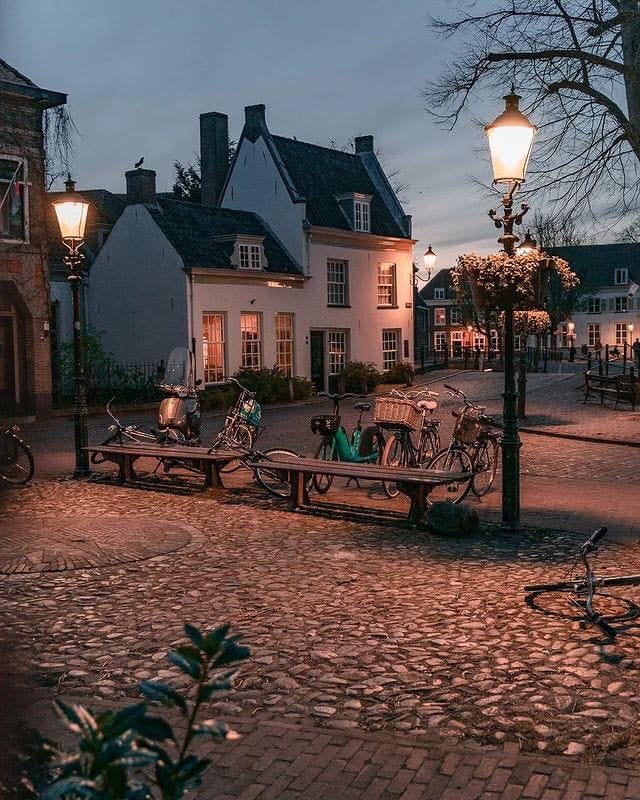
What We’re Really Talking About When We Talk About Density
When density enters the conversation at a community meeting, something curious happens. The stated concerns—parking, traffic, shadows, strain on schools—are real enough. But they rarely account for the emotional intensity in the room.
That intensity has deeper roots.
For much of American history, “density” was a coded word. It meant tenements and overcrowding. It meant immigrant neighborhoods that reformers wanted to “clean up.” It meant redlined districts and urban renewal projects that bulldozed thriving Black communities in the name of progress. Density became associated with poverty, disorder, and—let’s be honest—people who were different from those making the decisions.
These associations didn’t disappear when the laws changed. They settled into our collective memory, passed down through real estate practices, lending policies, and the suburban development patterns that promised escape from all that density implied. When we hear “higher density” today, we’re often hearing echoes of a century of messaging that told us certain kinds of neighborhoods were desirable and others were not.
Quality of life concerns compound these anxieties. Will more people mean more noise? Will new buildings block my light? Will “those kinds of developments” attract “those kinds of people”? The questions are rarely asked so bluntly, but they hover in the room.
Acknowledging this history doesn’t mean dismissing every concern as prejudice. It means recognizing that density conversations carry weight we don’t always articulate. And it means being honest that our instinctive resistance may have origins we’d rather not examine.
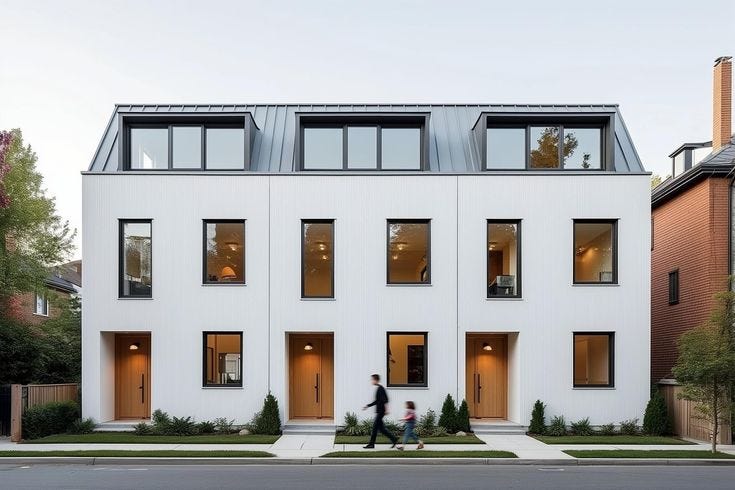
The Myth of the Frozen Neighborhood
Here’s what we tend to forget when we fight against new buildings: neighborhoods are already changing. They’ve never stopped changing. The only question is whether we’ll participate in shaping that change or let it happen to us.
Consider what shifts in a neighborhood even when not a single structure is added or altered:
People change. The young families who bought starter homes in the 1990s are now empty nesters. Their children, priced out of the market, live two towns over. The demographic composition of a neighborhood can transform entirely within a generation, regardless of what the buildings look like.
Businesses come and go. The hardware store becomes a yoga studio becomes a cell phone shop becomes a vacant storefront. Commercial districts rise and fall based on economic forces that have nothing to do with residential construction.
Trees grow and die. The saplings planted when the subdivision was built are now mature canopies—or they’ve been removed after storm damage, leaving the streetscape unrecognizable.
Infrastructure ages. The roads, pipes, and wires beneath us deteriorate. The school that was brand new when families moved in now needs a roof. The municipal budget that once seemed adequate now strains under the weight of maintaining far-flung development patterns.
Property values shift. The “affordable” neighborhood of one decade becomes the “up-and-coming” neighborhood of the next, and the “exclusive” neighborhood of the decade after that. Pricing dynamics change who can afford to stay and who gets pushed out—often regardless of what gets built.
Cultural character evolves. The restaurants, the gathering spots, the festivals, the unwritten rules about how neighbors interact—all of this transforms as populations shift, generational preferences change, and new residents bring new traditions.
The neighborhood you moved into doesn’t exist anymore. It hasn’t for years. What exists is a place in constant, quiet evolution—a living system responding to countless pressures and inputs, most of which have nothing to do with development applications.
When we fight against new buildings, we’re often fighting to preserve something that’s already gone. We’re mistaking architectural stasis for community stability. And we’re ignoring the very real changes happening around us while fixating on the changes we can see on a site plan.
Living Systems, Not Museum Exhibits
What if we thought about our neighborhoods the way we think about forests?
A healthy forest isn’t one where nothing ever changes. It’s one where change happens in ways that maintain overall vitality. Old trees fall and create space for new growth. Species compete and cooperate. Disturbances—even fires—can be necessary for long-term health.
A forest that never changed would be a dead forest.
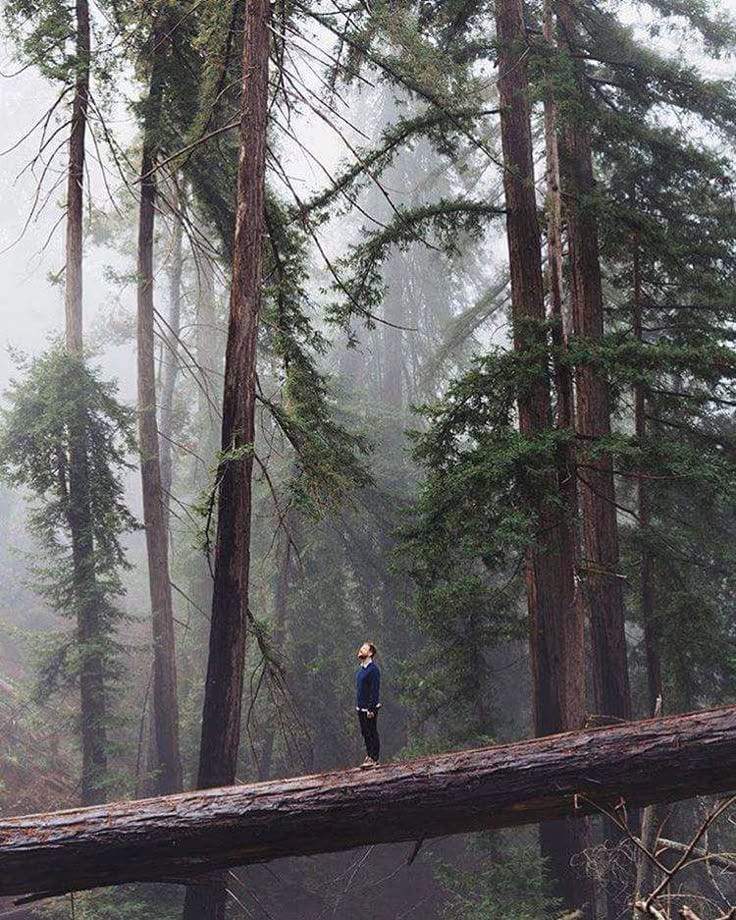
Neighborhoods work the same way. They need the ability to evolve, to welcome new residents, to adapt housing stock to changing needs. A neighborhood where no one can afford to move in is a neighborhood in decline, no matter how pristine the lawns look. A neighborhood where young families can’t find housing, where seniors can’t downsize, where workers can’t live near their jobs—that neighborhood is ossifying, even if the architecture remains frozen in time.
The question isn’t whether change will come. It’s whether we’ll have any say in what kind of change it is.
A Different Kind of Preservation
Here’s what I’ve learned after years of working with communities on housing policy: the people who show up to oppose development usually love their neighborhoods. That love is real and valuable. It’s not something to dismiss or overcome. It’s something to redirect.
Because the things we actually love about where we live—the sense of community, the familiar faces, the feeling of belonging—aren’t preserved by preventing buildings. They’re preserved by making sure the neighborhood remains a place where people at different stages of life, different income levels, and different household configurations can put down roots.
The young couple renting an apartment. The retiree downsizing from the family home. The teacher, the nurse, the restaurant worker who keeps the neighborhood cafe running. These people are the neighborhood. And if we don’t build places for them to live, they’ll leave. Not because developers ruined everything, but because we priced them out in the name of preservation.
The deepest irony of anti-development activism is that it often accelerates the very losses it fears. Block new housing, and existing housing prices rise. Prices rise, and longtime residents cash out. New residents with more money move in. The cultural character transforms. The community fragments. And the neighborhood that fought so hard against change discovers it has changed anyway—just in ways no one voted on and no one wanted.
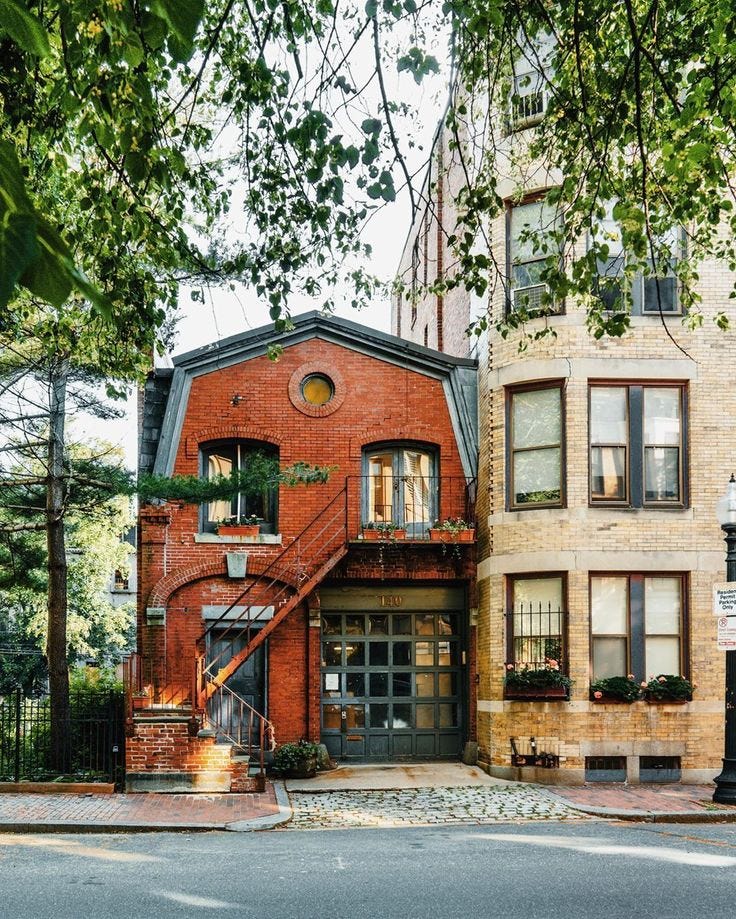
Moving Forward
None of this is to say that all development is good development, or that every proposal deserves approval, or that neighbors should have no voice in what gets built. Design matters. Context matters. Community input matters.
But our starting posture matters too.
We can approach each conversation from a place of fear, focused on what we might lose. Or we can approach it from a place of curiosity, asking what we might gain. We can treat our neighborhoods as fragile artifacts that must be protected from the future. Or we can treat them as resilient systems that have survived a century of change and will survive a century more.
The neighborhoods we love aren’t photographs. They’re living things. And like all living things, they must adapt to survive.
The question isn’t whether they’ll change. It’s whether we’ll be brave enough to help them change well.
What about your neighborhood? What’s changed in the years you’ve lived there—and what hasn’t? I’d love to hear your thoughts.
I'm reworking a zoning reform presentation to my mayor and commission and have been trying to come up with ways to address the concern on density and fear of change, this was spot on in expressing the sentiment and ways to move past.
Thank you for this!
Great post. Reframing how we love something is important. G.K. Chesterton has a good way of putting it: if you love a very specific thing about a place, you might be willing to compromise its integrity for sake of that one arbitrary thing; but if you love it, you're open to reforming it for the sake of keeping its spirit alive.
PS can you share where you got those photos from? I love saving places on Google Maps that look cool.