
The Workhorse and Its Limits
Why LIHTC matters, what it can’t do, and what every community needs to understand about how it really works. Part 2 of 4 in the series Who is New Housing Supply Actually For?

In the coming weeks, MSHDA will announce its 9% Low Income Housing Tax Credit awards - usually on a Friday. By the following Monday morning, local community funders will hear from the developers who made the list. Their tone is often imbued with quiet relief and only a modest amount of excitement. Because a tax credit award is the start of another two-plus years of work, not the finish line.
We also hear from the developers who didn’t make the list. Some of them have been on the margin of receiving an award for two or three years running. One project we’ve been watching has a half-acre site on a strong corridor, a community-based nonprofit ready to develop it, and a seventy-unit design that could become home to childcare workers, teacher’s aides, nursing assistants, and service workers. Last fall, three years into the project planning, on their second attempt at receiving LIHTC funding, they were three points shy of receiving an award. They’ll try again this year.
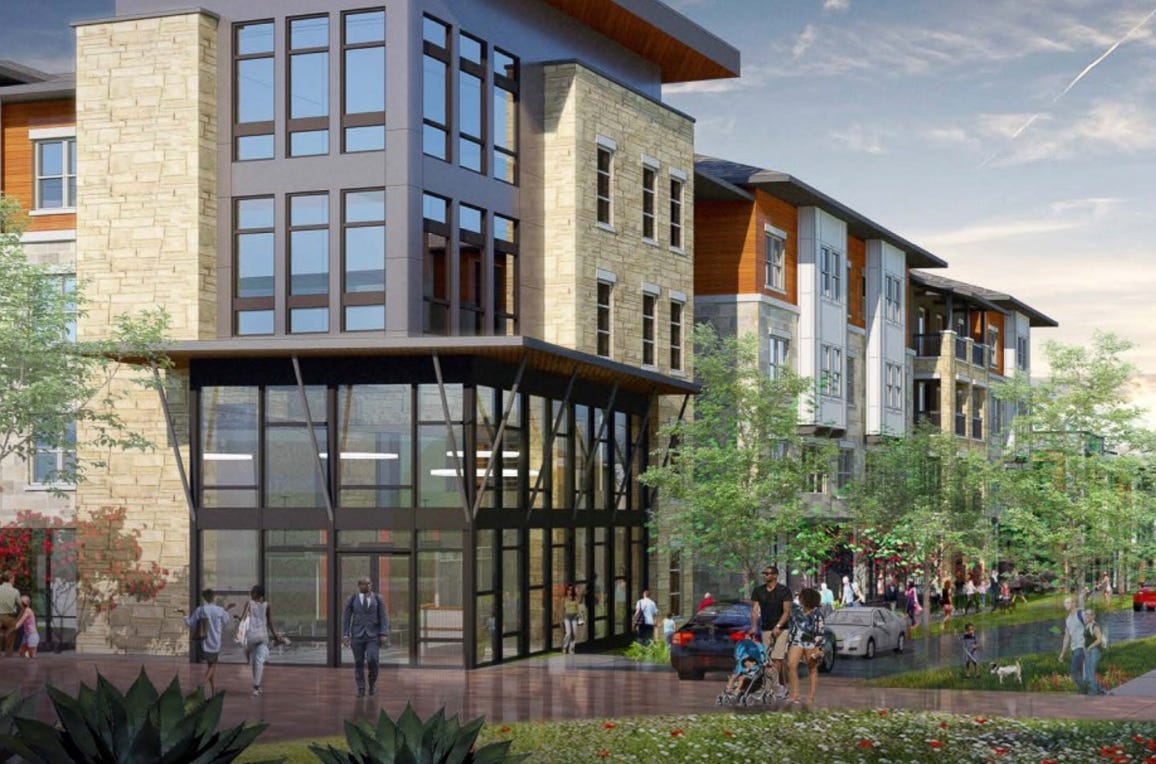
Image credit: Jonathan Rose Companies
That seventy-unit project is what we mean when we talk about affordable housing in this U.S.. Most new housing construction that is referred to as “affordable housing” — housing with capped rents for households earning well below the median income, and a thirty-year compliance agreement filed against the deed — runs through the Low Income Housing Tax Credit program, or LIHTC. It is, by a wide margin, the largest federal program supporting affordable housing. It has financed roughly 3.7 million units since 1987 and currently costs the federal government somewhere between $13 and $15 billion a year in forgone tax revenue. If you’ve ever walked into a newer apartment building anywhere in the country with rents that seemed shockingly reasonable, there’s a strong chance you walked into a LIHTC deal.
A short primer for the people who haven’t sat through a closing. The federal government allocates a fixed amount of tax credits to each state every year on a per-capita basis. State housing finance agencies — MSHDA, in Michigan’s case — then award those credits to developers through an annual competition. The winning developer doesn’t really want the credits in their own hands; they want the money. So they sell the credits to a corporate investor (almost always a bank) in exchange for upfront equity. That equity, layered with a long-term mortgage and a stack of other public sources, is what eventually pays for the building. In return, the developer signs a regulatory agreement that caps rents and limits tenant incomes for at least thirty years.
In practice, the program has become the workhorse for households earning roughly 40% to 60% of area median income. In Kent County that’s a single person earning between $28,000 and $45,000, or a family of three earning between $38,000 and $58,000. These are families with steady paychecks who are nowhere close to what the unsubsidized market is asking — and for whom a well-built LIHTC unit at $850 a month, utilities included, is genuinely life-changing.
But the program does not, on its own, reach the family earning $26,000. That household also needs a voucher or a project-based rental subsidy layered on top of the tax credits, or the math simply doesn’t work. And it doesn’t reach the nurse earning $65,000 from the first post in this series — she’s over the income cap and won’t qualify but may still have a hard time finding something that feels affordable.
Now look at the scale. New construction LIHTC completions average somewhere between 50,000 and 60,000 units per year nationwide. Including preservation and substantial rehab of existing affordable units, the program supports roughly 85,000 to 110,000 units a year. Compare this to the National Low Income Housing Coalition’s most recent Gap report — 7.1 million missing rental homes for households at or below 30% AMI alone. Even if Congress doubled the annual LIHTC allocation tomorrow, and that is not a vote anyone in either party is currently lining up, it would take decades to close the gap at just the deepest end of the market — and that’s before we count workforce, missing-middle, or starter-home need.
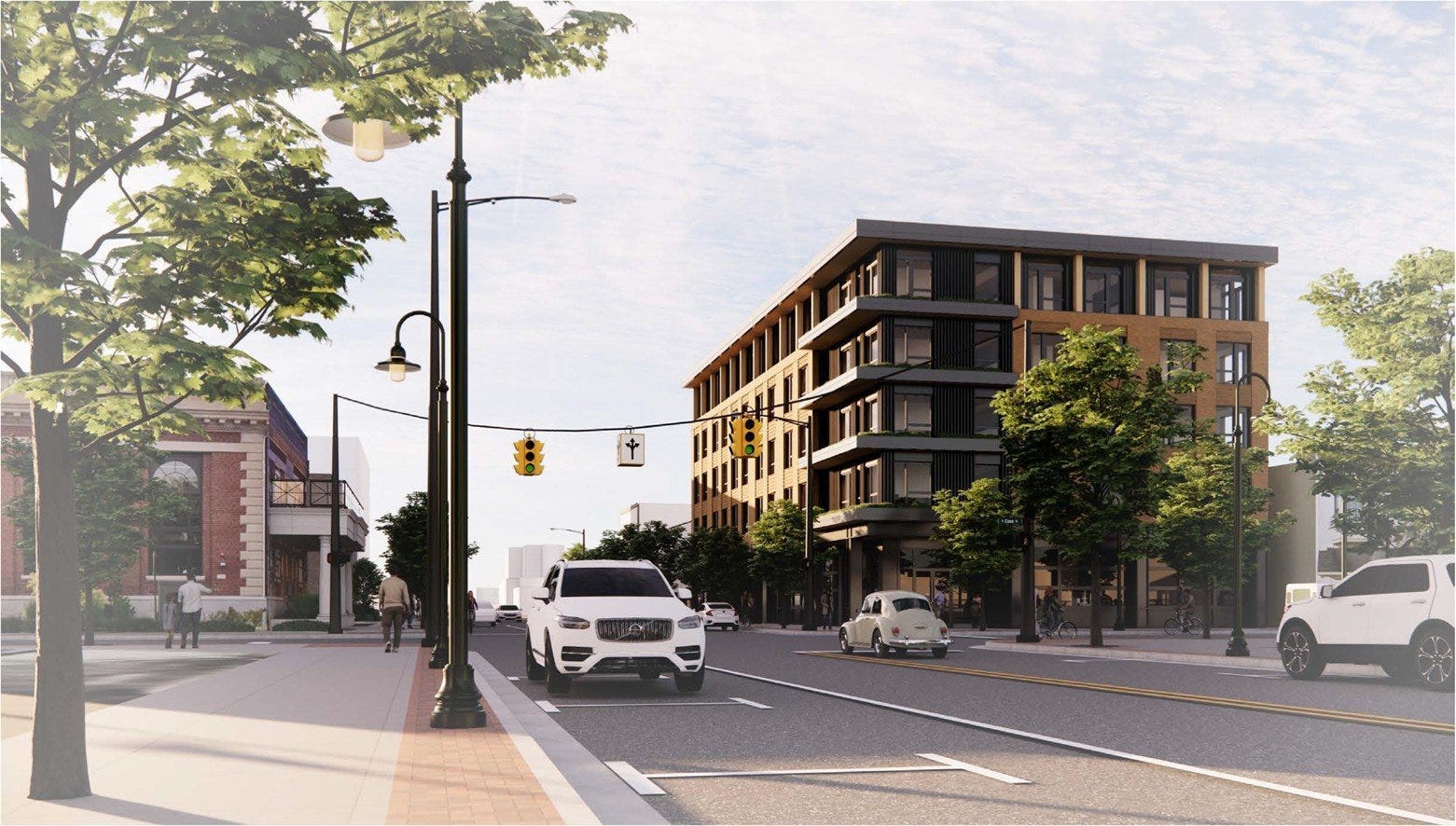
Image credit: Homestretch of Northern Michigan
This is what we mean when we say LIHTC is one arrow in the quiver. It is an important arrow. The buildings the program produces are, on the whole, beautiful, well-managed, and durable. The families they house are stable. We need many more of them. But LIHTC has, by accident more than design, become the default answer when an American policymaker says the words “affordable housing.” And the consequences of that default deserve honest attention.
The first consequence is that even the projects that should happen often don’t. State allocations are capped by federal statute. In Michigan, a typical 9% round will receive applications totaling two to three times the available credit. Some states are oversubscribed by four or five times. The Qualified Allocation Plan — the QAP — is the state’s annual rulebook for scoring those applications. Points are awarded for proximity to transit, schools, and jobs; for certain construction standards; for set-asides for specific populations; for deeper income targeting; for the leverage of local resources; and for a long list of other things that get adjusted each cycle. Strong applications usually score within a point or two of one another. A single point can mean the difference between a deal that closes and a deal that doesn’t.
The second consequence is cost. A LIHTC deal almost always costs more per unit to deliver than a comparable market-rate building of similar size and quality. Reasonable estimates put the gap somewhere between 10% and 40%, depending on the market and the structure of the deal. That isn’t a number we use to indict the program — it’s a number we use to plan around it.
Some of the cost gap is structural and, frankly, intentional. To score competitively under the QAP, developers often need to acquire land in higher-cost neighborhoods near transit, schools, and amenities. That’s the right outcome — those are exactly the neighborhoods where the families who win these units most need access — but well-located dirt isn’t cheap, and we are essentially paying a premium for location.
Some of it is paperwork. The legal, accounting, market study, environmental, architectural, and consulting work required to assemble a LIHTC deal is substantial. A typical 9% deal runs through three or four sets of attorneys and a half-dozen specialized consultants before it closes. Those professional fees are a real line on the development budget, and these costs rarely burden market-rate housing developments.
Some of it is the cost of the equity itself. Syndicators — the middlemen who match developers with corporate investors — take a fee. The investors expect a return commensurate with what they could earn elsewhere. Each layer shaves cents off every credit dollar before it actually reaches the building.
And some of it is simply time. A LIHTC deal that takes eighteen months longer than a market-rate deal carries eighteen months of additional carrying costs, predevelopment interest, and inflation on materials and labor.
Stack those together and a building that might be delivered for $250,000 per unit in a clean, market-rate financing structure can easily run $300,000 to $350,000 per unit (sometimes more) when it has to be assembled inside the LIHTC framework. None of that is waste in the moral sense — it’s the price of running affordable housing through the federal tax code instead of, say, an annual appropriation or a direct production subsidy. But it is the price, and it is one of the reasons the program doesn’t scale to meet the need.
We need LIHTC. We need it to keep going. We need it to grow. We also need to be clear-eyed about what it can and cannot do at its current size, its current cost, and through its current process. It cannot, on its own, serve the family earning $25,000 a year. It cannot serve the nurse earning $65,000. It cannot deliver fast enough or cheap enough to be the only tool in the box. And it gets harder, not easier, every year, as construction costs rise faster than the federal credit ceiling.
The next post will focus on workforce households earning 60% to 120% AMI, where the biggest gains can be made via a combination of zoning reform, well-designed gap financing, and a local development community willing to build small. That’s the tier where employers have the most directly at stake, and where the levers are nearly all local.
I'm always entertained by people's shock when they learn that affordable housing costs more to build than market rate. Not only are we subsidizing the rent to bring it below market, but we're also subsidizing the additional cost on top of market rate development. It's a bandaid solution to a flesh wound. I get that LIHTC helps people and creates much needed housing, but we also need to acknowledge that expanding the credits only throws more money into a broken system.
We have almost $40 trillion in national debt at this point, we need to acknowledge that this cycle of running up debt we never pay back has to come to an end at some point. Programs like LIHTC that burn money on both ends to create something more expensive will become fiscally unsustainable and it will no longer be a choice on whether to keep them alive.
Glad that this will be a series and delve more into workforce/incremental development, and excited to read more!
Another informative article. Thx.